Sunday, May 9, 2010

David Hilliard


For years photographers have developed newer more innovative ways to expand their art. artist such as David Hilliard have actively practiced alternate photographic techniques. for example, the using of multiple images to create a larger, more encompassing photo.this style has been around but David has managed to make its own. Hilliard began by documenting his life and the lives of those around him, he seen it as organizing the unorganized. his works can be seen as a mixture of documentation and construction reality.

he says "The construction of panoramic photographs, comprised of various single images, acts as a visual language. Focal planes shift, panel by panel. This sequencing of photographs and shifting of focal planes allows him the luxury of guiding the viewer across the photograph, directing their eye; an effect which could not be achieved through a single image."
i enjoy that you get a good sense of surrounding yet never loose focus of the subject. it provides a little more information on the artists propose.

Saturday, May 8, 2010

Frank Dituri


I stumbled upon Frank Dituri on the internet, and was drawn to the irony in his pictures if that's the word I'm looking for. He has numerous different types of images, but the ones I found interesting were his pictures of these women in a church. Now these are not just any run of the mill women going to church to confess there sins, but on the contrary these women seem to be sinning whilst at church. Now the only way I knew they were in church was because of the titles, which are, Kneeling at the Alter and In The Church. As you can see they are very well photographed, and in black and white film which I love. The composition and lighting really add to the surreal quality that his pictures seem to convey. What intrigues me is the message that he is trying to put across, which I can only guess at, like with all art. What is he saying by putting these women in scantily clad clothing or just underwear in a church? Are they confessing their sins by sinning, showing God who they are without apology. It's interesting to look at his work from the 70s and see how he has become so much more abstract in his photography. I enjoy looking a picture and having to stop and really look to see what exactly is being photographed. It's ok not to know what really is going on in the picture, and that's what I think make some of Dituri's images so appealing to me. There was also an image that was a close up of a woman's but, and it's title was The Behind. I'm not gonna lie I had to stop myself from having a laughing fit. I don't know if Dituri's intention was laughter from this picture, but I like when I can see a piece of art and laugh, and not have to take it so seriously.

Oliver Weber


When looking at work from Oliver Weber, nicknamed the "street photographer", most people are magically taken into his images. He has a way of capturing physical composition with emotional experience. this form of photo is greatly admired. Weber's work falls into the realm of documentary photography, the art of capturing moments. Ways in which to become successful documentary photographer one must posses certain qaulities that allow for the perfect shot. First, one must be aware of one's surroundings. Next, one must develop an eye for what might classify as a good photo. Finally, timing, and positioning can all play a factor in creating images that grasps viewers attention and tell a specific story. Composition, point of views, and capturing the climax of an event are also great tools used for good documentary work, especially by Weber. His photos focus on people in there natural,everyday environments. he feels it shows the current reality of untold stories. a lot of the reason i find his method interesting are because they resemble my own. Oliver roams and seeks out his subjects as they exist in the world. the images can be sometimes gritty,focus alot on underprivileged communities, but they brings voice to all those whose crises for help that have been drowned out.

Deborah Hamon


Deborah Hamon combines artistic forms of painting and photography to create beautiful images that are truly spectacular.the combination of these mediums stand alone but together creates a new reality that is rarely seen.
The Australians work aims to represent girls and there transition from adolescence to adulthood. She marvels at the complexity of maturity and wonderfully demonstrates it in her art. it also shows the playful nature of young people and the beauty of the innocence of children. These life-like photos/painting of these children at play are incredible portraits that will be admired for generations to come.
Harmon admits to using photo-shop as a tool for blending these two different works, drawing a bridge between them.
Her work has been show internationally and has won numerous accolades for her pieces. The next showing will be this summer, where she will be one of seven photographers the showcase their work in the new Mexican museum or art, ending august 1st.


Chenman is one of the young famous fashion photographers that I love. The reason why I love her work is as you see. All her work is not only about how fashion those model wear and how pretty they look in the image, but also she put a lot traditional elements especially Beijing elements in to fashion work. It’s not only to show off how different but also she is telling all those old building and subjects could relate to fashion. And she also put a lot painting technique and other art elements into her work. She is trying her best to annotation her own fashion through her work.

After I knew about her and her work I start to love fashion photography. It is not my not been seen as art, but more commercialized. To me it is another type of art too. She is not only famous in China but also really famous in the fashion word. She and a really good reputation from movie stars and famous models whom had worked with her. They all said she did a really good job to express the virtue and beauty of everyone of them. Her successe is my goal to achieve my dream.


I am so happy to introduce you my friend Josh Zhang. He is a photographer, a teacher and also close friends of me. In the time I start love photograph, he have touch me a lot about how to open my view of this amazing art world and some time give me a lot knowledge of how photography is. Here I would like to show you some of his work had posted on national geography website.

All those image have perfectly showed his ability and how different from his image and other Chinese photographers. I guess maybe because he has been study aboard in Austria and also study from a lot foreign photographers. All his image seemed more meaning behind the image itself. And the way he uses natural light recourse. Another reason he image is really different is because his cultural background. He knows China better then other and he does combine both western and eastern elements together to tell story in his pictures. Most of his image on National Geography are took in some town of China, all he did is tell a story of normal people how those people’s life is. That s really strong element that photographer need to have.

Joel Sternfeld- Walking the High Line


Joel Sternfield's series called walking the high line, shows a paradox within New York City. The High line was created in the thirties to lift freight trains off of the crowded New York streets. Seventy years later it is all but abandoned (with hopes to make it a park in the future). As of right now, the high line is a pristine, overgrown grassland within a concrete jungle. This is the paradox that Joel works with. In a place where the only nature you find is man-made nature (central park), the high line is uncontrolled-left up to the plants, this is very evident in Joel's photographs. What is so pleasing about Sterfelds photo's is the surprise that they created for me. Not once would i have though that such a place would exist in New york city, where everything is controlled and made to specification. To this extent it sits as an oasis, away from the hustle and bustle of the city, away from humanity. Although the city is still visible from all around the highline, is searves and an area unique in a city of uniformity. this is the beauty of the pictures. Nature cannot be stopped, and decay will always happen- that is just a matter of life, and for all of humanities efforts against chaos, it still creeps in, and this is what Joel sternfeld shows with this series.
Of all I am most excited about this photographer, Christi Neely, her work reminds me of what I find myself wanting to do. Its always nice to see stuff that reminds you why you yourself enjoy being behind the camera. Some of her work plays a great deal on forcing the eye to see things like perspective, contrast, or sharpeness. But she also using many different techniques in her work. She also plays with not the true image itself but more of letting the viewer decide what they want it to be. I loved this train picture she had altered with color to draw your eye back into the background but also it appears the majority blurry though there is sharpness in it. It makes your eyes wander through the photo to see what you can find in it. She also had a lovely piece that is very similar to that of cars at night with a long exposure. The light she used was that of like she tried drawing with it but the source was not a car. The orange yellow tones of night light fill the frame but also is pleasantly surprising beautiful. It is not something you can say what it is but enjoyably pleasant to look at. It feels warm and playful, but also skillfully technique wise done.

I got to meet this lady named Babara Bradley, who has been traveling around the world taking pictures of other countries. Her work is beautifully done with color and lighting its amazing to look at these prints in real life. This picture is from a really bad camera I had with me and I wish it did justice to her work. The color pops out at you not soley because the richness of the subjects, nor do they look like they have been saturated. But the way she has used light from where she is paying special attention on she wants it to portray her subjects. Of the work I got to see the one on the far right was way too amazing. I wished they were slightly larger in size but they still can be appreciated. The subject I am sure is impart of a tradition of the culture but the light that surrounds her is not a flash source but captures this feeling of you have invaded upon something secret. The unknown light highlights the clothing of the garment over this individual just right that you almost have to second guess it. I am hoping she does some more work and a show soon.
A local photographer that has stretched the boundaries of the traditional portrait is letting her work be observed down on lark street. Keira Lemonis new series for 2010 follows an eerie feeling most females dread to ever be in. The images craft-fully done to display the to meaning of the situations she has placed her images in. The emotional connect you have then with the subject sucks you within each photograph. Not only do the images stand strongly by themselves creepy elevator music from a small old fashion radio is blasting in the corner of the small room.

The images vary in size when on display but each of them are powerful regardless of how they are printed. Each subject significantly relates to the other but each are the focus of their own. It is almost to the point that you can not look away but you feel desperate to as well. The series is strange and creepy but it also stands out, make you remember her.

Even her other work holds true to making an impact on the viewer. Keira also has done wedding and other side work but her sense of hold the camera and finding the beauty is not the traditional comerical shots. She aways a new life to enter traditional photo's.

Stranger


This group of picture named “Stranger”and I didn't show all the pictures. Theses photos were taking by Benoit Paillé, a Canadian photographer that I saw on flickr. He is “the best photographer on flickr” and for sure after you saw his work you will think he is amazing.

Most of his photos are portraits. And mostly the person that he took is someone that he never met before. Through his camera you can see a lot different people, different character, behind those people you can have a lot imaginary space to build up the whole image. In his image, a lot people were involved in, different jobs and class. You can tell how his personality is.

His image are really sharp and most of the time his image composition create a strong information that we only pay attention on the person that he took not anything else. And the color on his images is my favorite part. That yellowish green color also construct the mystique of the image it self and also the person he took.

I hope that every will enjoy his extraordinary work and learn form him.

Gregory Crewdson


Gregory Crewdson's work has always fascinated me, I had even tried to echo his work with a high school photo project, but needless to say it did not work out how I envisioned it. The way he sets up his photographs is the same way a director would go to set up his movie stage. He is meticulous in setting up his picture, with the way everything is placed and the lighting must be perfect. It takes him about a month to do one photograph. In an interview who talked about how museum dioramas interested him, and how he was struck by the still image and the limitations of the photograph. The last part is what I would say draws all photographers to making their art by conveying a message through one moment. What I get from Crewdson's images is a horror movie like feeling, as well as the unknown. His photographs raise more questions than answers, which I think is key to his work. He also creates his own world , which I thought was appropriate for our last project, but I don't think I would ever want to be in his world. It seems that all of his subjects have the same expressions on their faces, it's almost like they are not truly existing as if they are already dead. Both pictures on the top have a couple in them, the one on the right you can only see the woman and just the man's back. In the image on the left you can see both the woman and man. What's interesting is that all of these people's faces are looking down and away from anything that is in the room, as if they are in their own world.

Sebastião Salgado


Salgado is a photographer that could be described as a photo-journalist. He travels around the world taking pictures that are as beautiful as they are tragic. One of my favorite of his bodies of work is one that he took of a gold mine in Brazil. He was able to capture the filth and oppression that was the everyday life of these workers. A part of Brazilian life that the country did not want the world to see.
The composition of the images is visually appealing. The image shown here on the right titled "Going Up," is shot in such a way that the we as the viewer actually feel like we are one of the workers. You can imagine the effort it takes to get out of this mud pit that these men had to work in everyday. The mud is so close to the bottom of the frame that it seems like we can just step into this world.
The details that Salgado captures is so acute that it rivals that of Ansel Adams. The musculature of the men is so defined that you can see the strain they are exerting. It is this closeness that the viewer feels to the subjects that has made Salgado's work so influential in the world of photo-journalism. I have always been drawn to this type of photography, because of the artist's courage to go out there in the world and show the public things that those in charge would rather leave unpublished. And their ability to go into these harsh environments and at the same time create artwork that is so moving that it can start that spark of outrage needed to commence change.

Robert Mapplethorpe


Robert Mapplethorpe is best known as a shock photographer. His X Portfolio is the most notorious of all his work and also the most well known. What most people don't like to admit is that even though his images are shocking, or could be considered obscene, it is also shot in such a way that one can't help but admit that there is a beauty and universal aesthetic in his work.
One example of this idea is "Joe," a photograph from his X Portfolio. At first glance, the viewer will either be taken off guard by the beauty of the composition and lighting, or be taken aback by the fetish content. But the image is only shocking to those individuals that do not take part in this lifestyle. For the man in this photo, this is part of his life and would not be shocking, but seen as a way of self expression and sexual freedom.
The beauty is in the careful positioning of the figure and the way in which the composition is lit. The figure's arms and legs are positioned parallel to each other in such a way that the angles created draw the eye into the image. The detail that Mapplethorpe is able to achieve in the highlights and mid-tones of the image is masterful and is why is images have been appreciated by the art community.
Mapplethorpe may not be everyone's idea of a great artist, but what he has been able to do is make people see the beauty in a subject matter that is sometimes hard to accept. He was able to make people appreciate the aesthetic quality even if they weren't a part of that world.

Annette Messager


I recently had the opportunity to visit the MoMA and it was there that I was first introduced to the work of Annette Messager. I was first drawn to her series of work named "My Vows" because of its unique installation. This piece consists of close-up and partial images of body parts that, when put together, don't make up a whole figure, but instead create a collage of mixed bodies in a confusion of identity. It is unable to tell what parts belong to whom. The piece acts as an inclusive representation of humanity. These works also adopt some meaning from the artist's Catholic upbringing. The large assortment of photographs of the body bring to mind the images left at sites of religious pilgrimage by the religiously devoted.
Messager had created her own aesthetic work by combining the flat, smooth surface inherent in a photograph with organic materials such as mesh and string. It is this combination that takes Messagers work out of the realm of being strictly visual and gives it sculptural aspects as well. Each individual image is hung by a single strand of string. Messager arranges the images into shapes such as a circle, a heart, and a spiral.
The images themselves are also visually interesting. Each picture is black and white with a black background and high contrast that makes the objects stand out. The images are also framed in black which further enhances them. This black and white aesthetic is one that I have always been drawn to and Messager pulls it off beautifully in her work.

Philippe Halsmen


Philippe Halsmen had a wonderful imagination. This shows through most of his work on many different levels. He can show his playful side in photo collections such as the Dali Atomicus, where he used different techniques to hold up furniture around the room to make it appear as if it were levitating. He even has a reative side as to use naked women to create a skull shape with Salvador Dali again another photographer that would be good to base an imagined reality project off of. He is more famously known for his work with Time magazine and his portrait work. He is really able to get into the minds of the people he is photographing and this is really evident in the photograph of Salvador Dali who is most famous for his surrealist art work. Dali would paint things to appear in ways that you know they couldn’t actually appear one of his most famous works is The Persistence of Memory and it features drooping clocks in the desert. Halsmen was able to paint a beautiful canvas with just women in a way you would never think to paint women or that women could be used to create an actual object.

Rob Gallella


You don’t have to see much of ron galella’s work to understand how harmful it is to photography as an art. It’s people like him who give photographers a bad name. Ron Galella is one of the most famous paparazzi photographers out there. His work is nothing special, essentially stalking different celebrities as they do every day average citizen things. I love candid photos but these candid photos are done all wrong. They use stalking as a method of taking the picture and the celebrities can do nothing about it, they are powerless against the paparazzi. I do not care where a celebrity is shopping for their groceries, I do not care where they went on vacation nor do I care who they are cheating on who with. Since Ron Galella was one of the earliest successful paparazzi I blame people like him for Americas obsession with celebrities. Yes I do understand that people “know what they are getting into” when they become a celebrity, but I do believe that some people do it just for their passion for acting not for the fame and the glory. The fact that it has become normal and acceptable for people to chase down famous people such as princess Dianna and kill them since they can not escape means that our world has gone too far. Photography should be an art, it should take time and have meaning. The only meaning behind these photos is money and a sick obsession with actors, actresses, athletes, and heiresses.

Elliot Erwitt


How do you define photography? Is it merely taking a picture with a point and shoot? Or is it snapping a shot with a piece of equipment that already has disposable in its name. Photography can be self expression, or a glimpse at reality for others who might not be able to see things from a first hand point of view. A photographer should open their lens so that the world may see what they see, they should publish their photos so that others who do not have the ability to travel may see what else is out there in the world. But more importantly photographers should put their work out there so we as a society can take a step back from ourselves and see the whole world in the greater picture of things and not just what’s right infront of us. Because if you become comfortable with a situation then you become jaded to it and when you become jaded towards something then you stop caring and you should never stop caring.

Elliot Erwitt is a famous photographer that mainly worked in black and white photography. A picture that almost everyone is guaranteed to have seen is his “segregated Water Fountains” a photo that appears in countless US History Textbooks. I am a child of a generation that did not have segregation, to me segregation is just a piece of history that I wasn’t a part of . Just stories. However, it is photos like this photo here, capturing a colored man at a water fountain that is blatantly not equivalent to the water fountain next to him labeled “white”

Besides that Erwitt has many other beautiful candid pictures of different people ranging from president John F. Kennedy to Arnold Shwartzenager. His use of lights and shadows helps create astonishing pictures with very distinct silhouettes.

He has a photo collection called Phototoons and although I am not a strong advocate for this collection I do believe that it would have been good to use during the imagined reality project. He took simple situations such as men looking at art vs women or a bird in comparison to an airplane and you got that there was humor behind his photos. Some of the photos in this collection that I did not like were the photos where he replaced a human head with a bulldogs head.

His portrait collection of strangers has a very interesting feel to it I can’t tell if he knew all of these people in it and each scene was set up or if he just went into different neighborhoods and took pictures candidly of people. Capturing the simplicity of children in the moment without them reacting to the camera is very hard and i believe he did it in a beautiful way.

Friday, May 7, 2010

Alan Ostreicher- Untitled

Alan Ostreicher's "Untitled" project extracts abstract ideals from the real world. All of the photographs in this project are of wavy lines and random shapes, but they are for the most part recognizable as an object from everyday life. One photo is of power lines, and another is of white paint on a wooden fence, but even with these photo's noticeably being these things they still hold an absract quality to them. And this is where Alan Ostreicher succeeds with "Untitled". To take everyday objects and view them differently through photography is one of photography's most redeeming and explorable qualities. The ability to express the world the way you want to others, is where the art in photography is. And to this extent Alan Ostreicher, controls this ability. Many of the photographs that are not discernible immediately seem to be glass with paint on it, in different patterns. This also is another use of photography's main aspects, the use of light. by painting a clear object in different fashions, the light that creates the photograph changes and becomes something more. And this is where the art lies. Alan Ostreicher takes the world and shows it through his vision to create art. By using both the natural world unchanged for his photography, and the created world of his glass panes, to create the same aesthetic quality throughout, he bridges the gap between objects intended for art and objects with practical purposes, and he shows that art can be accomplished in both ways, you just need to know where, and more importantly, how to look.

Hiroshi Sugimoto


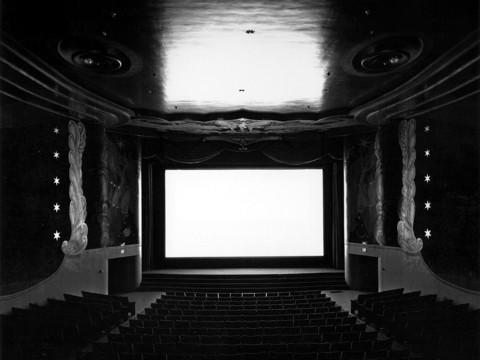
Another photographer whose work I've always thought was very intriguing is Japanese artist, Hiroshi Sugimoto. Unlike my last entry on Larry Clark, my interest in this photographer's work stems directly from the visual aesthetic that the photos have rather than the content in the pictures. The two bodies of work that Sugimoto has done that I find the most interesting are his works done on thaters and a body of work called "Seascapes". The theater project contains many images that look similar to the one I posted above. What sugimoto does is use a very long exposure in the theater while a film of some sort is playing on screen. The result is a bright white screen and a very nicely illuminated theater. Using the light from the screen as the only light in the picture really makes for some interesting light and shadows in the final image.


This next image is from his "Seascape" project. The images come out looking very minimalist. They all consist of 50% ocean and 50% sky, with the horizon line almost directly through the center of the image. Normally I would think that I would get bored of images like this that don't really seem to have too much going on, but there is something about the simple quality in these images that really keep my interest.

http://www.sugimotohiroshi.com/